
Scaling restricted-niche ad spend from $100/day to $10k/day
Sun May 17 2026 · scaling · by Arthur B.
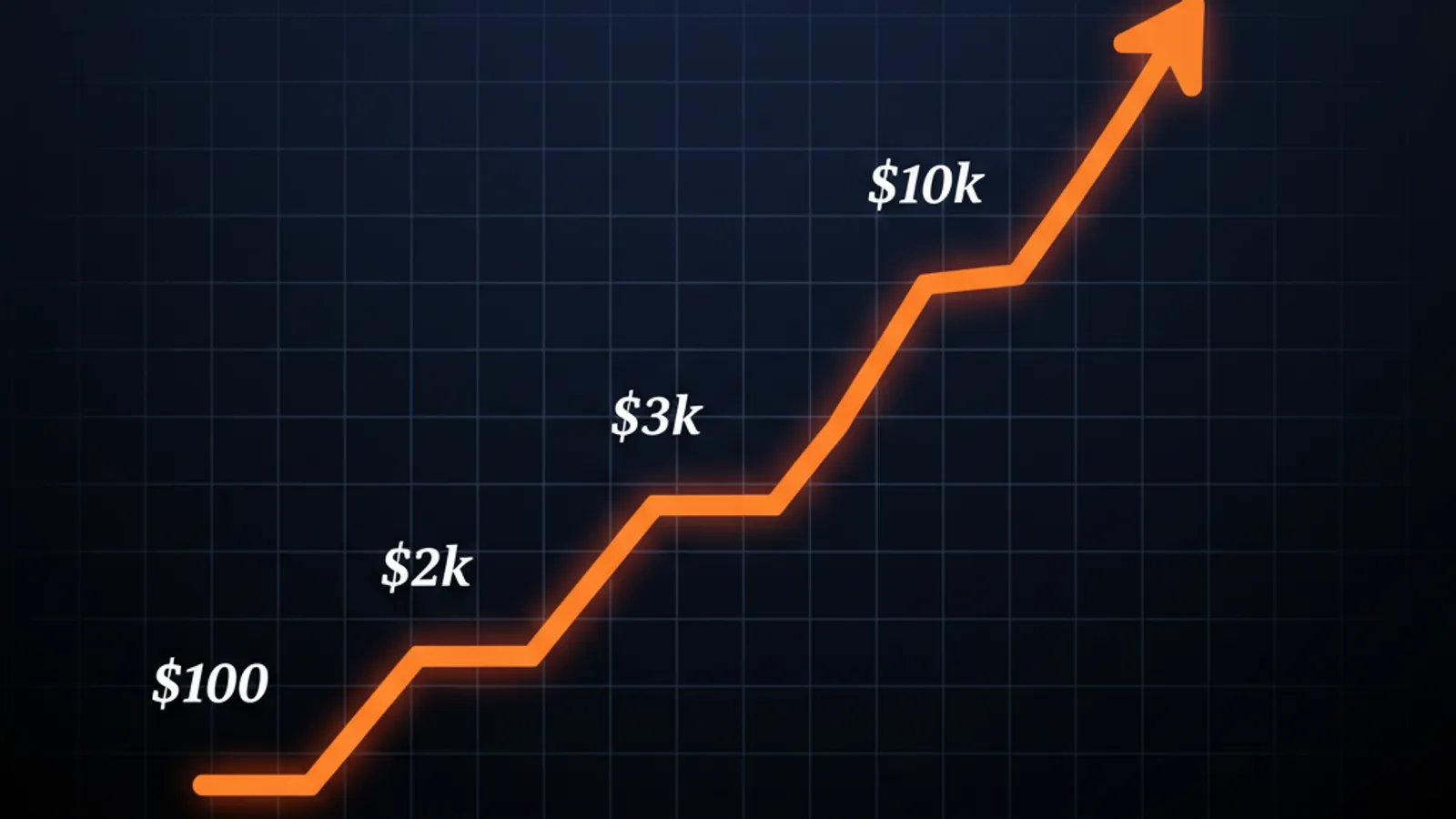
The operators who reach $10k/day are not spending more per account than the ones who plateau at $500/day. They are running more accounts, warming them correctly, and scaling each one at a pace the algorithm can follow.
This is the sequence. Not a philosophy — the actual process.
Why most operators plateau
The plateau happens at one of three predictable inflection points:
$500/day — the operator scales one account past its sustainable ceiling without a parallel account structure, triggers a review, loses the account, and starts over from zero.
$1,500/day — the operator has one account at a high spend level but is rotating creative manually and losing efficiency as the audience saturates. No second account is warm enough to pick up the load when primary bans.
$3,000/day — the operator is running multiple accounts but all of them are in the same Business Manager or using the same payment method. One ban cascades.
The fix for all three is the same: account structure first, spend second.
Phase 1: $100–500/day — prove the funnel
Before scaling anything, the core funnel needs a confirmed positive signal. A positive signal is a purchase ROAS above 1.5x or a lead CPL within 30% of your target for at least seven consecutive days.
If your funnel is not producing a positive signal at $100/day, more spend will not fix it. This phase is about funnel validation, not scaling.
Account setup for phase 1:
- One primary account, agency rental or your own warmed account
- Single campaign, ABO structure, 3-5 ad sets at $20-30/day each
- One creative per ad set — no creative rotation yet
- Pixel seeded with 200+ events before restricted offer launches
The goal by $500/day is a confirmed winner creative and a known cost-per-outcome. You need those numbers before phase 2 makes sense.
Phase 2: $500–2,000/day — expand the structure
At $500/day you introduce the parallel account. Not as a backup — as a scaling vehicle. The parallel account runs the same winning creative against a different cold audience segment. Primary account keeps scaling at 20-30% per day; parallel account starts at $50/day and ramps independently.
What changes in phase 2:
- Creative rotation begins: introduce one new creative per week per account, kill anything below 80% of the top performer’s CPM-adjusted ROAS after 5 days
- Audience expansion: LLAs (Lookalike Audiences) based on purchase data, scaled from 1% to 3% as spend increases
- Cloaking configuration review at each account: every new account needs its own routing rules, whitepage configuration, and pixel setup — the cloaking stack guide covers the per-account setup checklist
Spend ceiling per account in restricted niches:
| Vertical | Stable daily ceiling (single account) | Notes | |---|---|---| | Nutraceuticals / supplements | $1,500–2,000/day | Higher creative burn rate; plan 2 new creatives/week | | CBD / hemp | $800–1,200/day | Stricter Meta review; lower ceiling before policy risk rises | | Casino / gaming | $2,000–3,000/day | Cloaker quality matters most here; whitepage must be tight | | Grey e-commerce | $1,500–2,500/day | Depends heavily on landing page compliance profile |
These are empirical ceilings from account cohorts, not Meta policy limits. You can spend more per account — but above these levels the ban probability per week rises steeply in each vertical.
Phase 3: $2,000–5,000/day — account multiplication
At this phase you are not scaling individual accounts. You are running a portfolio.
The 3-account structure:
- Account A (primary): $2,000/day, 90+ days of spend history, your best creative
- Account B (secondary): $1,500/day, 30-60 days, testing new creatives and audiences before promoting to A
- Account C (warm backup): $200-300/day, fresh, seeded, ready to step up when A bans
When Account A bans — and it will — Account B steps up to primary spend within 24 hours. Account C begins accelerated warm-up. You never go to zero.
The post-ban recovery sequence details the 14-day rebuild for when an account bans. At this phase of scaling, running that rebuild in parallel with your live accounts is the standard operating procedure.
Payment and entity separation:
- Each account family (BM + accounts + pages) uses a separate payment card and billing entity
- Do not share cards across BM families — a ban on one card triggers a cross-account review on every account using that card
- See the ad accounts guide for entity and banking structure recommendations
Phase 4: $5,000–10,000/day — operational maturity
The difference between $5,000/day and $10,000/day is operational, not algorithmic. You are not finding a new scaling trick — you are running the same process more reliably across more accounts.
At this phase you need:
Creative pipeline: 4-6 new creatives per week across the portfolio. Each account burns creative faster at high spend. The operators who scale past $5,000/day have a systematic creative production process — not ad-hoc requests to a designer.
Audience refresh cadence: Cold audiences saturate faster at high spend. Build a 90-day audience replenishment calendar: new LLA seeds every month, new interest-based audiences tested in Account C before promoting to A.
Monitoring automation: Manual account health checks twice a day are not sustainable above $5,000/day. Alerts on CPM spikes (>20% week-over-week), delivery drops (>30% from 7-day average), and policy warning emails need to trigger immediate human review — not a next-morning check.
Agency infrastructure: At $10,000/day you are spending $70,000/week. The agency-managed path makes operational sense here — not because you cannot run the accounts yourself, but because the time cost of managing 5-8 accounts across multiple BMs at this spend level competes directly with the time cost of finding and deploying creative, which is where the real scaling leverage is.
The path from $100/day to $10k/day is not one account scaling up a curve. It is a portfolio of accounts, each running below its risk ceiling, with enough parallel structure that no single ban interrupts total spend for more than 48 hours.
That is the operational model. The spend numbers follow from getting the structure right.